What is IRS Penalty Abatement?
Discover how IRS penalty abatement works to save significant amounts of money, time, and stress.
Read More >When you fall behind on your taxes, penalties and interest can quickly add up to become a substantial portion of your total tax debt. IRS penalty abatement is a form of tax relief that allows eligible taxpayers to reduce or eliminate penalties assessed by the IRS. In some cases, you may even qualify to have previously paid penalties refunded.
If you’re facing penalties for not filing or paying your taxes on time, penalty abatement (or penalty adjustment) may provide major relief. Abatement eliminates an assessed penalty entirely, while an adjustment reduces or alters the penalty amount. Understanding your options and navigating IRS requirements can be complex, which is why many taxpayers work with experienced tax professionals to maximize their chances of approval.
Understanding Your Options:
The IRS offers several pathways to penalty relief, each designed to address different taxpayer circumstances. Understanding these categories helps you determine which approach best fits your situation and strengthens your request for relief.
Reasonable cause is one of the most common grounds for penalty abatement. The IRS may grant relief if you can demonstrate that you failed to meet your tax obligations due to circumstances beyond your control and show ordinary business care and prudence. Some examples of reasonable cause include:


IRS First Time Penalty Abatement (FTA) is an administrative waiver that provides relief to taxpayers with a clean compliance history. Often the easiest form of penalty relief to obtain, FTA can remove failure-to-file, failure-to-pay, and failure-to-deposit penalties for a single tax period.

The IRS also provides other administrative waivers in certain situations, such as federally declared disasters, IRS service delays, or combat zone service. These waivers simplify penalty relief for eligible taxpayers and usually require less documentation than reasonable cause claims.

Statutory exceptions apply when the tax law itself allows penalties to be waived. They kick in automatically once certain conditions are met, such as qualifying military service, presidentially declared disasters, or cases where the IRS gives incorrect written advice.

If an IRS employee made an error that directly caused your penalty, you may be entitled to relief. This could include processing mistakes, incorrect guidance provided by IRS representatives, or system errors. Documenting the IRS error thoroughly is essential for this type of relief.
Not all IRS penalties qualify for abatement, so understanding which penalties can be removed helps you focus your relief efforts effectively. The most commonly abated penalties include:
Assessed when you don’t file your tax return by the deadline (including extensions). This penalty is typically 4.5% of the unpaid taxes for each month the return is late, up to 22.5% of your unpaid taxes.
Applied when you don’t pay your taxes by the due date. This penalty is generally 0.5% of your unpaid taxes for each month they remain unpaid, up to 25% of your unpaid taxes.
Charged to businesses that don’t deposit payroll or other taxes on time. The penalty ranges from 2% to 15% depending on how late the deposit is made.
Assessed for negligence or disregard of IRS rules, substantial understatement of tax, or substantial valuation misstatements. These penalties are typically 20% of the underpayment.
Applied when you don’t pay enough tax through withholding or estimated payments throughout the year.
Some penalties are more difficult to abate than others, and certain penalties may not qualify for relief under standard abatement programs. A tax professional can evaluate your specific penalties and determine the most effective strategy for seeking relief.
Starting in 2026 for tax years 2025 and onward, the IRS will automatically apply First Time Penalty Abatement for eligible taxpayers.
For earlier tax years, or if you believe you should have received automatic abatement but didn’t, you can verify your eligibility by checking whether you satisfy all of the following requirements:

You have filed all currently required tax returns or filed an extension of time to file.

You had no penalties in the three tax years before the year you’re asking to have the penalty removed (except penalties for failing to file an information return).

You have paid the tax owed or have an approved payment arrangement in place.
The beauty of First Time Penalty Abatement is that you don’t need to provide a reason for your late filing or payment. Your clean compliance history serves as the justification. However, FTA only applies to failure-to-file, failure-to-pay, and failure-to-deposit penalties. It doesn’t apply to other penalty types like accuracy-related penalties or fraud penalties.
Successfully obtaining IRS penalty abatement often requires expertise in IRS procedures, strong documentation, and effective communication with the agency. While some taxpayers successfully navigate the process on their own, working with experienced tax professionals significantly increases your chances of approval and can save you substantial time and stress.
At Optima Tax Relief, our licensed tax professionals and attorneys help taxpayers reduce or remove IRS penalties through proven abatement strategies. We can:
Navigating the IRS penalty abatement form and process can be challenging, especially if you're unfamiliar with IRS procedures or if your situation involves complex circumstances. Optima Tax Relief has been helping taxpayers abate and mitigate penalties for over a decade.
Frequently Asked Questions
Optima Tax Relief, LLC is a tax resolution firm independent from the IRS. This content is made available for informational and educational purposes only. Nothing included in the content should be taken as a guarantee, warranty, prediction, or representation about your specific situation. This content is not intended to be a substitute for professional advice and services. We encourage you to consult with a tax professional to discuss your specific tax matters. Individual results may vary. We do not provide tax, financial, bankruptcy, accounting, or legal advice and nothing contained in this content is intended nor shall be construed as such.
Discover how IRS penalty abatement works to save significant amounts of money, time, and stress.
Read More >
Get an in-depth look at reasonable cause and how taxpayers can use it to reduce their IRS penalties.
Read More >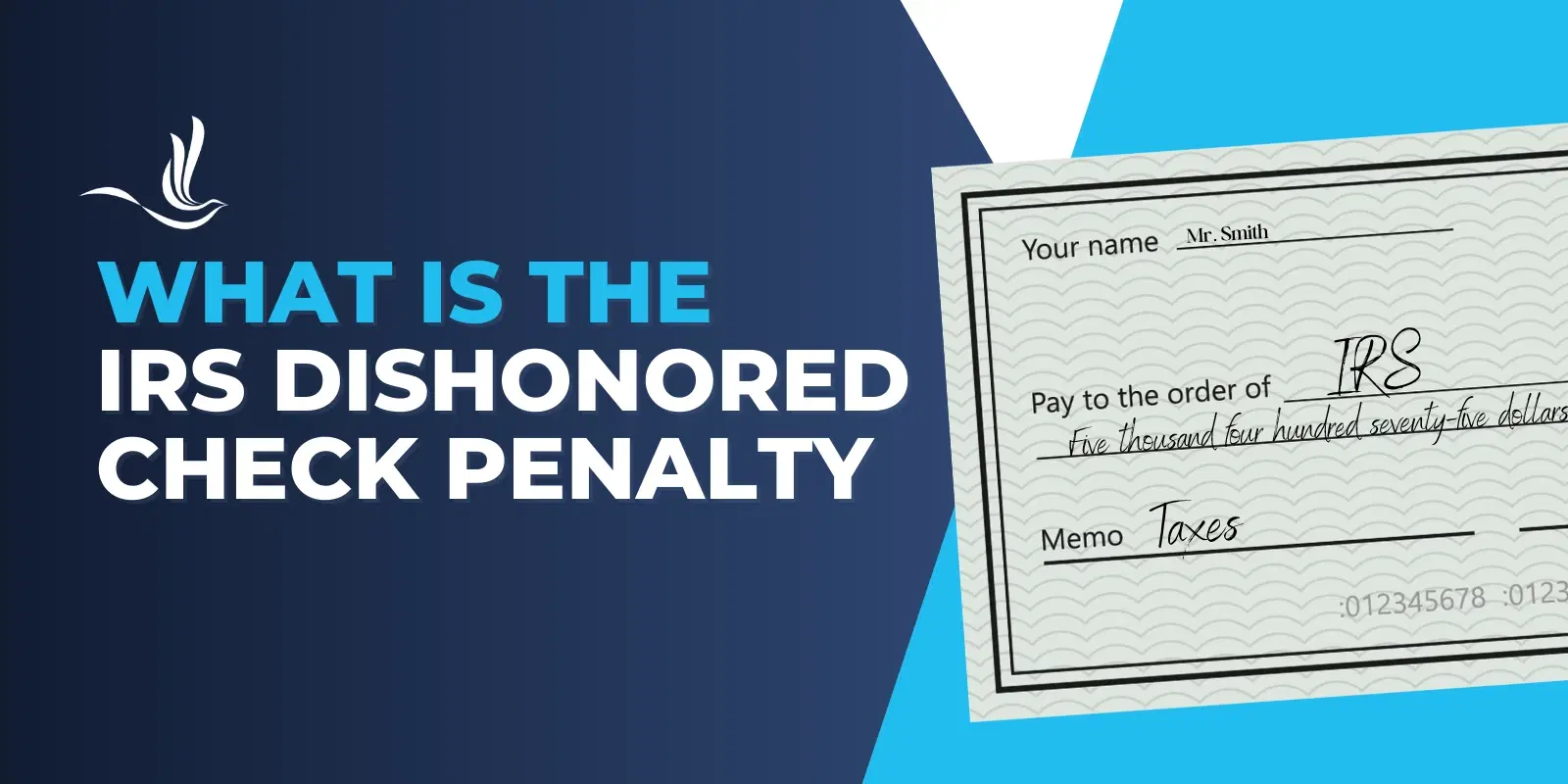
Explore IRS dishonored check penalties, its implications, and proactive measures you can take to prevent it.
Read More >
Learn some of the most common IRS penalties and how to avoid (or reduce) them.
Read More >
Here’s everything you need to know about underpayment penalties.
Read More >
Did you know the IRS negotiates through tax relief? Learn how to negotiate successfully.
Read More >Free consultation
Call 1-800-536-0734 for a free consultation.